Classes and talents
| Classes and talents | |
|---|---|
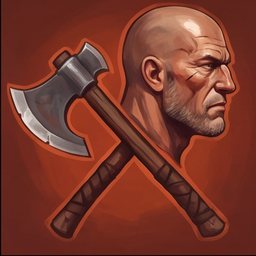 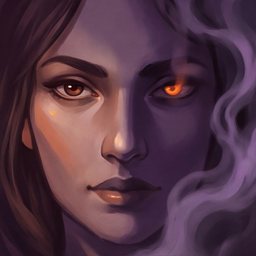   The four companion class icons (painted, TAL-ICON); the nine hero classes are designed, icons to come | |
| Type | Gameplay system |
| Classes | 13: Barbarian, Warlock, Artificer, Paladin, Bard, Cleric, Druid, Fighter, Monk, Ranger, Rogue, Sorcerer, Wizard |
| Tree | 7 tiers × 4 columns, 23 talents per class |
| Points | level − 1; 29 at the level-30 cap |
| Calculator | Talent calculator |
| Design | design v1 (TAL-1 and TAL-2, game-design-lead, 2026-09-30); numbers are the first balance pass |
| Status | Designed; not yet in the game |
Classes in TLOAA are talent trees. Every class has one tree, and a character picks spells and abilities from it with a point per level. A character can mix classes, but then only the start of each tree is open; to reach the better spells at the bottom of a tree, a character specialises in one class.
The director's words (2026-09-30)
"stalvan - barbarian, vella - warlock, manfred - artificer, zanze - paladin, hero can be whatever he picks. classes in game will be made like the talent tree so every class has talent tree, and you can pick the spells abilities from it, you can be mixed class but then you can spend talents just on the start of the tree, to be specialized in one class just go to the bottom of a tree with better spells."
Everything beyond those words is the lead's design (design v1), which the director can overrule. The numbers are a first balance pass, to be tuned in play.
The classes
| Class | Companion | Resource | Branches (roles) | |
|---|---|---|---|---|
 |
Barbarian | Stalvan | Rage | Fury (damage) · Iron Hide (tank) · War-Cry (control and support) |
 |
Warlock | Vella | Pact | Hex (damage) · Binding (pet and control) · Price (sustain and support) |
 |
Artificer | Manfred | Charge | Siegework (damage) · Alchemy (healer and control) · Clockwork (pet and protection) |
 |
Paladin | Zanze | Oath | Dawn (healer) · Tide (tank) · Reckoning (damage) |
 |
Bard | hero only | Cadence | Klapa (healer) · Lament (control) · Ballad (damage) |
 |
Cleric | hero only | Lamp Oil | Lamp (healer) · Knot (protector) · Salt (damage) |
 |
Druid | hero only | Sap | Maquis (healer) · Boar (tank) · Jackal (damage) |
| Fighter | hero only | Momentum | Blade (damage) · Shieldwall (tank) · Command (support) | |
 |
Monk | hero only | Breath | Current (damage) · Stillwater (healer) · Reef (tank) |
 |
Ranger | hero only | Focus | Longshot (damage) · Hound (pet) · Snare (control) |
 |
Rogue | hero only | Nerve | Knife (damage) · Smuggler (stealth) · Venom (poison) |
 |
Sorcerer | hero only | Heat | Sirocco (damage) · Red Rain (damage over time) · Squall (control) |
 |
Wizard | hero only | Ink | Rhumb Line (damage) · Compass (control) · Lodestone (protection) |
The four companion classes belong to the companions and are fixed for them. The nine hero classes (TAL-2, from the free SRD class list, retold for the Adriatic) have no companion: the hero can pick any of the 13 as his home class at character creation. Every class has the same tree shape, rules and Power budget, so every party role has several options.
Grounded in the setting:
- Bard: the guslar (the epic singer) and the klapa (Dalmatian close-harmony singing), with a lijerica, the three-string bowed lyre of the southern coast.
- Cleric: the Keepers of the Lamp (svjetioničari), lighthouse keepers, not priests.
- Druid: the maquis: rosemary, sage, myrtle and holm oak, with the wild boar and the golden jackal as its two shapes.
- Fighter: galley marines and the town guard.
- Monk: the breath-divers of the coral and sponge islands, a school of craft with no temple or vows.
- Ranger: karst hunters with an Istrian hound.
- Rogue: the smugglers of the outer islands, with the venom of the scorpionfish, the weever and the sea urchin.
- Sorcerer and Wizard: see their class pages.
The rules in one screen
| Rule | Value |
|---|---|
| Level cap | 30 (proposal: about 1–12 on Island 1, 12–22 on Island 2, 22–30 on Island 3). The demo slice ends around level 5–6: Unconfirmed |
| Talent points | 1 per level from level 2: points = level − 1, so 29 at the cap |
| Tree shape | 7 tiers × 4 columns: three themed branches (columns 1–3) and a small Core column (4) |
| Tier gate | tier t opens after 4 × (t − 1) points in that same tree: 0, 4, 8, 12, 16, 20, 24 |
| Prerequisites | an arrow: the talent above must be at the stated rank |
| Capstones | tier 7 holds one capstone per branch; a character may take only one |
| Multiclass rule | Tiers 1–3 of every class tree are open to everyone; tiers 4–7 are open only in your home class's tree, and only while every point you have is in that tree |
| Home class | the companions are fixed (Stalvan barbarian, Vella warlock, Manfred artificer, Zanze paladin); the hero picks one at creation |
| Respec | at the hearth of any inn (konoba) or the party camp; free up to level 10, then a coin fee per level (amount Unconfirmed); resets one character; the hero may also change home class |
What the numbers mean in play
- A capstone costs at least 24 + 1 = 25 points, so a pure specialist reaches it at level 26 and still has 4 points to spare.
- A mixed character (for example Stalvan with a few paladin talents) can spend all 29 points, but only in tiers 1–3 of any trees. It gets the tier-2 actives and the tier-1 and tier-3 passives of each tree it touches, never a tier-4 or deeper ability.
- The first talent active (tier 2) arrives at level 5, inside the demo slice.
- Why this rule: it is the director's rule stated exactly, it needs one check, the calculator can grey out tiers 4–7 the moment a point lands elsewhere, and specialising becomes a clear, visible commitment.
Tree shape
- Columns 1–3 are the branches, each a vertical run from a tier-1 passive to a tier-7 capstone: a passive, an active, a passive or upgrade, a key active at tier 4, upgrades at tiers 5–6, and the capstone at tier 7.
- Column 4 (Core) holds two class-wide talents (tiers 1 and 3), so a player can meet the tier gates without leaving the class.
- 23 talents per class, 51–53 ranks per tree: a specialist with 29 points fills a little over half of it. Choosing which half is the build.
- Talent types: active (a new ability for the action bar), passive (always on), upgrade (changes one named ability). Passives and upgrades have 1–5 ranks; actives and capstones have 1.
Base abilities and talent abilities
- Base kit: every class learns five abilities by level (levels 1, 1, 2, 4 and 6) from its home class alone: a generator or filler, a spender, a movement tool, a control or party tool, and a defensive. A character is always playable without talents.
- Talent actives add up to seven more abilities for a specialist. A mixed character borrows the tier-2 actives of other trees.
- Borrowed abilities take their cost from the home resource, at the same number: a barbarian's borrowed Morning Radiance costs 40 Rage.
- The action bar has 8 ability slots (keys 1–8) and 2 consumable slots. A character has more abilities than slots, so choosing what to slot is part of the build. The companion AI uses whatever its character has slotted.
Real-time combat
| System | Rule |
|---|---|
| Global cooldown | 1.0 s (0.75 s at most haste); defensives, Blood Price and Berserk are off the GCD |
| Cast times | 0–3 s. Moving cancels a cast; a channel can be walked out of (ending it). A cast queued while walking starts when the character stops |
| Cooldowns | 6–30 s for rotation abilities, 45–180 s for big ones and capstones |
| Ranges | melee 3 m, short 10 m, medium 20 m, long 30 m (long equals the far zoom, so the furthest target is always on screen) |
| Area shapes | circle, cone, line and arc only; at least a 2 m circle, a 3 m cone, a 2 m wide line, so every area reads at the far zoom |
| Crowd control | stuns at most 2 s on normal enemies, half on elites, bosses immune; the same control on the same target within 15 s lasts half as long |
| Threat | 1 per point of damage, 0.5 per point of healing; tank stances and auras ×2 (Anchor Stance, Oath of the Tide); a taunt puts the taunter at the top +10 % |
Resources
| Resource | Class | Behaviour |
|---|---|---|
| Rage 0–100 | barbarian | starts at 0; +10 per Cleave, +15 per Bull Rush, +1 per 1 % of health lost; −3/s out of combat. It builds in the fight and punishes a slow start |
| Pact 0–100 | warlock | starts full; +5/s always; Blood Price turns 15 % of health into 40 Pact. Mana-like, with a blood valve |
| Charge 0–100 | artificer | starts full; +8/s always. Spent in bursts; the free Bolt Shot fills the gaps |
| Oath 0–100 | paladin | starts at 30; +20 per Oath Strike and +3/s in combat; falls back to 30 over 5 s after combat |
Power: one number for every class
Every damage, heal and shield is a percentage of Power, one number per character from level and gear, so abilities compare across classes and gear stays out of the tree. The budget:
- a filler per global cooldown ≈ 100 % Power (120–130 % with a cast or cost); casting ≈ 110 % per second;
- a cooldown ability ≈ 100 % + 25 % per second of cooldown, capped at 450 %;
- area effects ≈ 60 % of the single-target value per target, up to 6 targets; damage over time ≈ 130 % of the direct value;
- heals use the same numbers; group heals ≈ 50 % per target; shields 20–30 % of max health for at most 8 s;
- passive ranks: broad damage or healing +2 % per rank, a category +2–3 %, one named ability +4 %, crit +1 %, max resource +10.
Reading combat from above
- Every area ability draws a painted ground telegraph in its class colour while aiming. Enemy telegraphs are always warm red-orange and stronger, so a dodge reads first.
- Class light colours: rust red and iron (barbarian), dusk violet with ember (warlock), verdigris and brass (artificer), dawn gold with Adriatic blue (paladin). The cold pale blue belongs only to the undead and the held sea.
- Effects are short and specific: one light per spell, no particle soup, no screen-wide flashes. Heals show on the healed character.
- Pets and turrets (the mora, the Brass Crab, the springalds) have strong silhouettes from above.
Party synergies
- Damage amplifiers: Bad Luck, Rallying Bellow, Withering Hex, Cowing Roar.
- Protection: Breakwater and Stand With Me (take hits for allies), Pact Ward and Gearshield (shields), The Unbroken Line (a projectile wall), Quicklime Smoke (enemies miss).
- Healing: Dawn, Alchemy, Interest, Brand of Dawn.
- Positioning: Riptide Pull and Undertow gather enemies for Whirl of Iron, Blight Cloud, Sea-Fire and Dawnblade Arc.
The hero
- Picks any of the 13 classes as his home class at character creation; his base kit and resource follow it.
- Can mix like everyone else, and change home class only with a full respec.
- His name, story and default class are Unconfirmed — awaiting the director.
World fit
- Magic stays a rare accent with a visible source: the warlock's pact (the patron is Unconfirmed), the paladin's oath (warm gold light from the oath-bearer), the artificer's infusion (only the clockwork; the crossbow, sea-fire and quicklime are period craft). The barbarian uses no magic.
- The paladin's oath is sworn to the dawn and the sea, an in-world ideal with no gods, saints, crosses, halos or church words. Its device is a rising sun over a wave.
- Grounded in about 1300–1500 on the Adriatic: windlass crossbows, the springald bolt-thrower, Byzantine sea-fire, quicklime thrown at sea, the bura wind, the urok (the evil eye) and the mora (a night spirit of local folklore, not a religion). No gunpowder.
The build string
A build is saved and shared as one line of text, readable by the calculator:
L1-<level>-<home code>[-<tree code>.<ranks>]…
L1is the format version; class codes arebar,wlk,artandpal.<ranks>is one digit per talent in the tree's fixed order (tier, then column), with trailing zeros dropped; trees with no points are left out.- Examples:
- Stalvan as an Iron Hide tank at level 30, 29 points, capstone Breakwater:
L1-30-bar-bar.5500011032201103002201 - a mixed barbarian with paladin talents at level 26, 25 points, tiers 1–3 only:
L1-26-bar-bar.5530111-pal.53001
- Stalvan as an Iron Hide tank at level 30, 29 points, capstone Breakwater:
- Checks, in order: points ≤ level − 1; every rank ≤ its maximum; each tier gate is met within its tree; prerequisites are met; tiers 4–7 only in the home tree and only with no points elsewhere; at most one capstone. A point can be removed only if the build still passes afterwards.
Open questions
Party size; the level cap and the demo's level range; the warlock's patron; the hero's default class and story; Nana's and Peels' classes; the respec fee; each character's weapon (working: Stalvan a two-handed axe, Manfred a crossbow, Zanze a sword and round shield, Vella none). See Open questions.
See also
- Talent calculator
- Barbarian · Warlock · Artificer · Paladin · Bard · Cleric · Druid · Fighter · Monk · Ranger · Rogue · Sorcerer · Wizard
- Party and combat · Camera
- Gameplay portal
Sources: docs/design/talents.md §1–§8, §12 (TAL-1 and TAL-2, design v1, 2026-09-30); docs/design/dnd_srd_licensing.md; docs/design/talents.json; docs/design/validate_talents.py Last updated: 2026-10-22 (F-180: list indent)
Categories: Gameplay · Talents · Classes