The Puppeteer
↓ Download PDF print-ready character dossier| The Puppeteer | |
|---|---|
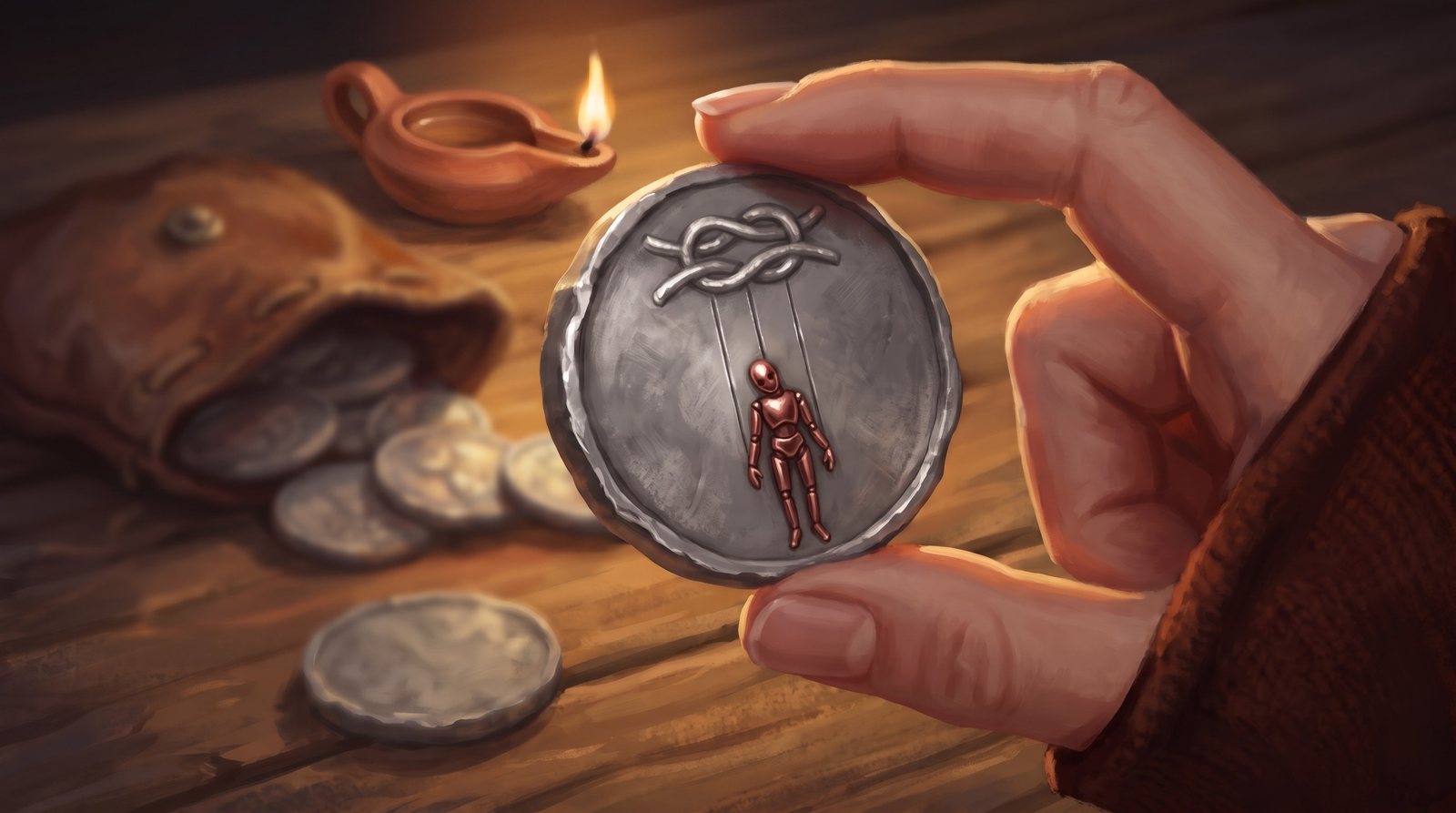 The bandits' pay: puppet silver, the knot, three threads and a red-gold puppet | |
| Type | The villain of the game, unseen in the Prologue |
| Sign | A tied knot with three threads hanging from it (working) |
| Threads | Thin, glowing, pale gold (working) |
| Voice | Calm, warm, amused; heard through a dead king's mask in Chapter 6, and through the Iron King in Act 1 (proposal: through the dead Buyer in Act 2) |
| Seen | Never, in the Prologue |
| Revealed | In the final act, at Nana's table |
| Pact | Pact of the Thread (a warlock; his boss kit) |
| Status | Story design (STORY-QUESTS-1, 2026-10-25; STORY-MAYOR-2, -3 and -4 and WARLOCK-PACTS-1, 2026-10-26) |
The Puppeteer is the unseen villain of TLOAA, who works the dead like marionettes on thin, glowing threads from far away. In the Prologue he is a faint laugh when the hollow lich's strings snap, a sign stamped on silver, a pale-gold thread that cuts boats open, and once, in Chapter 6, a calm and amused voice speaking through a dead king's mask: "You keep breaking my toys."
The end of Chapter 1 (in the game since 2026-11-03): when the lich falls the stair collapses. Stalvan finds the crew's plank door, and the party leaves by the sea dock and the water cave on the door as a raft, out of the Glavica's east cliff. At the pier it finds its own boat sunk; Peels gives the Cut Splinter, and Nana pays. Vella's portal, the Severed Thread, the thread walk and the dig face are not in the game (parked; they may return later). See the Chapter 1 script, Scene 8.
The first part of this page is what the player can know. The second part, Behind the curtain, holds the director's notes for the acts after the Prologue and the final act, and gives the ending away. What happens after the prologue is told in full below, spoilers included (Behind the curtain).
What the player sees
- The threads. The dead of Stara Luka move on threads that run up into the dark. When the party kills the lich, its strings snap upward and the robes fall empty. A severed thread stays in the hero's hand, warm, pulling faintly toward the town. It pulls harder near a stone, and glows.
- The sign. A tied knot with three threads hanging from it: on the seal of a summons in the mayor's saddlebag, on the bandits' coins in Chapter 3, on the silver paid to a signal boy in Meneferu in Chapter 4.
- The coins. His hired hands are paid in puppet silver: old silver struck with the knot, three threads cut below it and a tiny puppet of red gold set where they end. A bandit who dies holding one gets up again, and in a purse the coins all turn the same way. The party follows them from Chapter 3 to the final act.
- The cuts. Twice a boat that carries the party sinks with a clean cut in its hull, its edges glowing in the colour of the thread: in Stara Luka and in Kaldvik. "Someone is following you."
- The cut words. Wherever the old texts say what the three stones cost, the words are gone: a scholar's tablets "always broken just there", a page cut out of a temple book with a blade, a mural in the tomb of the Sealed Kings chiselled away days before the party arrives. "Someone keeps cutting out the price."
- The voice. In the tomb of the Sealed Kings, threads lift a dead king's mask and the Puppeteer speaks for the first time: "You keep breaking my toys." The mask turns to Vella: "And give your patron my regards." He sounds pleased to meet them.
- The grey coat. In almost every place the party reaches a day too late, someone remembers a soft-voiced gentleman in a fine grey coat. Nobody connects him to the threads aloud.
How the threads work (story rules)
- A thread moves a body. It cannot keep a soul: what it moves stands, walks, smiles and never speaks.
- The dead on threads can dig and haul and fight, but they cannot use keys, and they cannot undo the old knot that ties the stone under Stara Luka shut.
- A cut thread drifts back toward whoever holds the other end.
- Not everything that bites is his: the cats in the tomb and the crocodiles in the reeds are only angry, or hungry. "No threads on these."
Behind the curtain: beyond the prologue
The story, as you play it
Someone is walking the dead about on threads. For most of the game he is only a voice.
The voice. In the tomb of the Sealed Kings he speaks for the first time, through a dead king's gold mask.
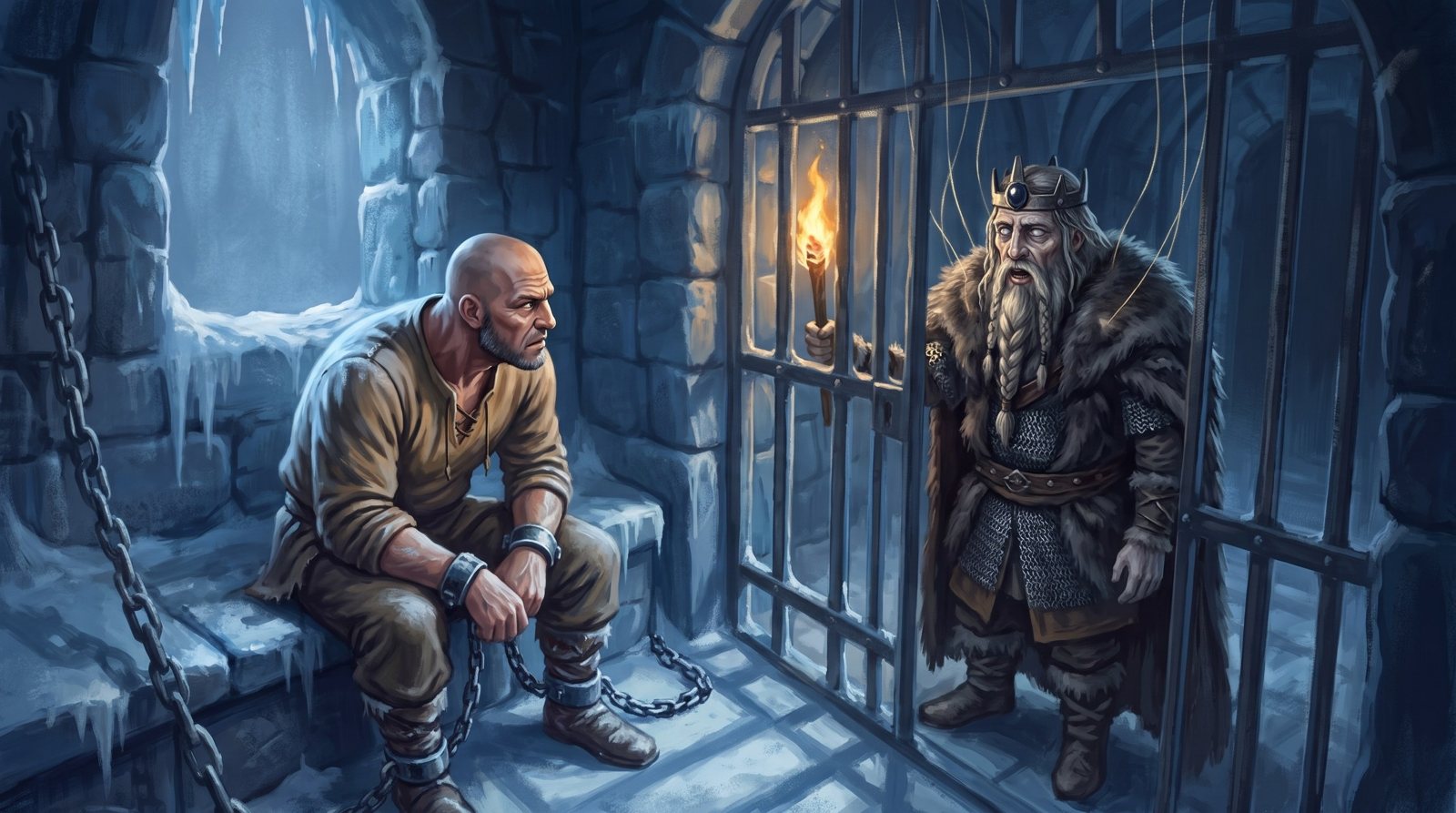
Act 1. Stalvan is a prisoner in the north. The Puppeteer talks to him in his cell through the Iron King. One of his stories is about a chest he broke open at nine.
Act 2. You hear him once, in the jungle, through a dead man.
The final act. You find Ser Filip, the missing mayor of Stara Luka who hired you, as a thin, grateful "prisoner" in the north. He travels home with you.
How it ends Spoilers
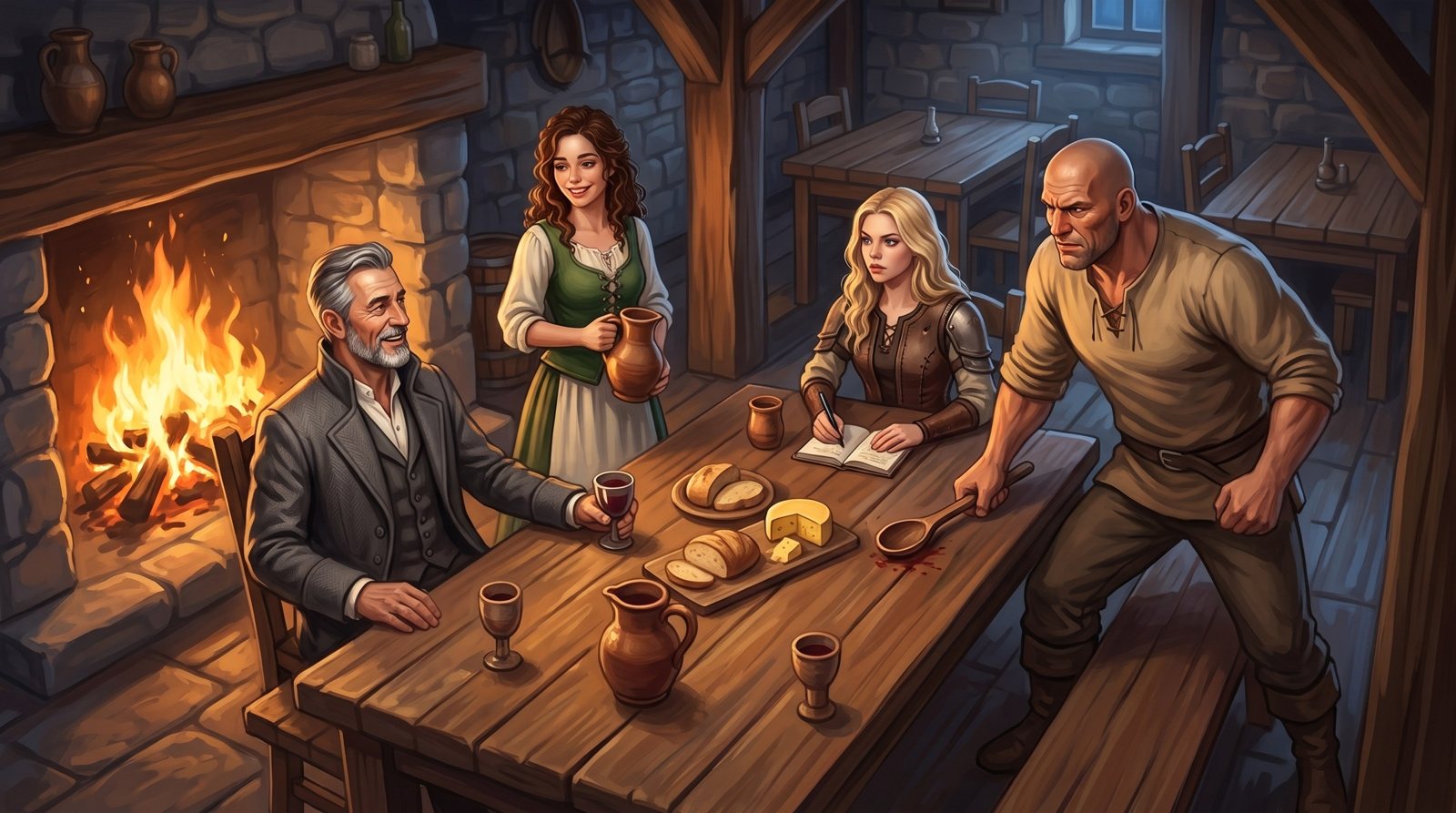
At Nana's table after closing, Ser Filip tells the chest story, word for word. Zanze's pen stops: "What? Can you say that again?" Stalvan is already standing: "Same story." The mayor is the Puppeteer.
He is three hundred years old: the child the town walled up alive in the plague year, behind a good man's face. He wants the three stones, so that his dead wife Dora and his daughter Mila come back to him. And he wants the town on threads forever.
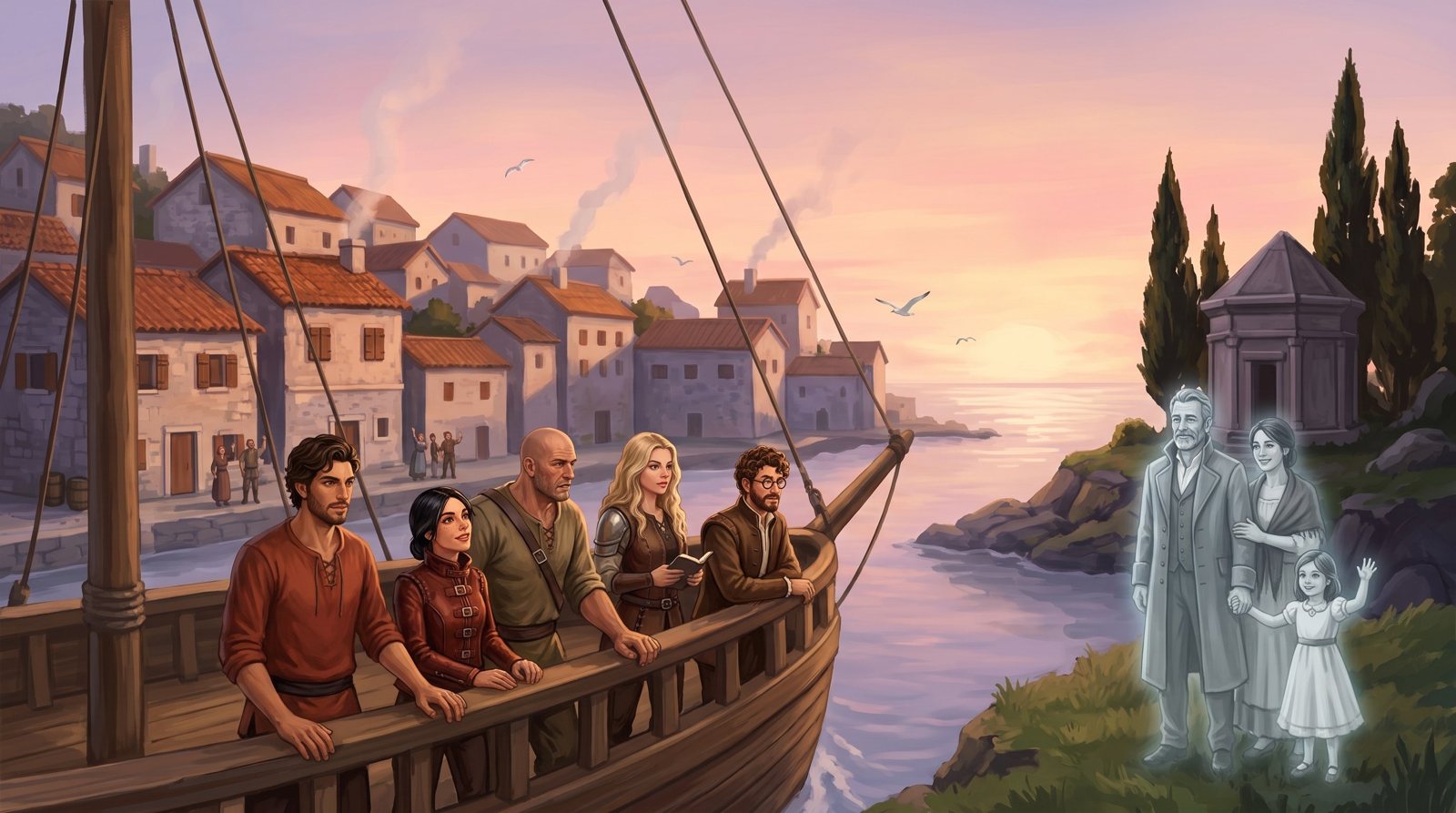
The dead rise under the inn, and he dies in the last fight. Every thread falls with him. As the ship leaves at dawn, only Vella sees him on the hill with Dora and Mila. She nods to him once.
Across the stories Spoilers
- On the road. He walks a day ahead on the roads he can see and a day behind into the rooms he can't.
- Act 1 (The Escape, proposal). He talks to Stalvan through the Iron King, always in the same words. When the crown comes off he speaks once more through the king: "He was always a poor king. Keep him." After the escape Vella's grave-sight wakes on Captain Harl, who has followed the party since Chapter 1.
- Act 2 (Under the Green Crown, proposal). He is heard once, in the jungle, through a dead man the party knows as the Buyer, listening to the kept kings for a voice that is not his own. The Count of the masked ball is not him. Act 3 is not written, beyond ending with Ser Filip found.
- The final act. Where he is found is Unconfirmed: the notes say he is the Iron King's prisoner; since The Escape frees that king, its proposal is the grey coat's room in Jarnborg's high loft. On the way home Harl's ghost walks behind him and the town's dead turn their faces from him. In the last fight Mila's body stands beside him; when he dies she lies down at last. The game ends as it began, with a ship and the mausoleum headland.
- Mila. Dora, the midwife, and Mila, seven, died in the fever winter after the council outvoted him on the grain ship. Nine nights after Mila's burial he tied a thread to her body. It stands and smiles and never speaks, and it is not her: the soul is not on the thread, and she has been waiting on the hill with her mother all along. He does not believe that rule.
- Not decided: what the party does for him on the day it comes home, the shape of the last fight, how he gets the other two stones, and the family names.
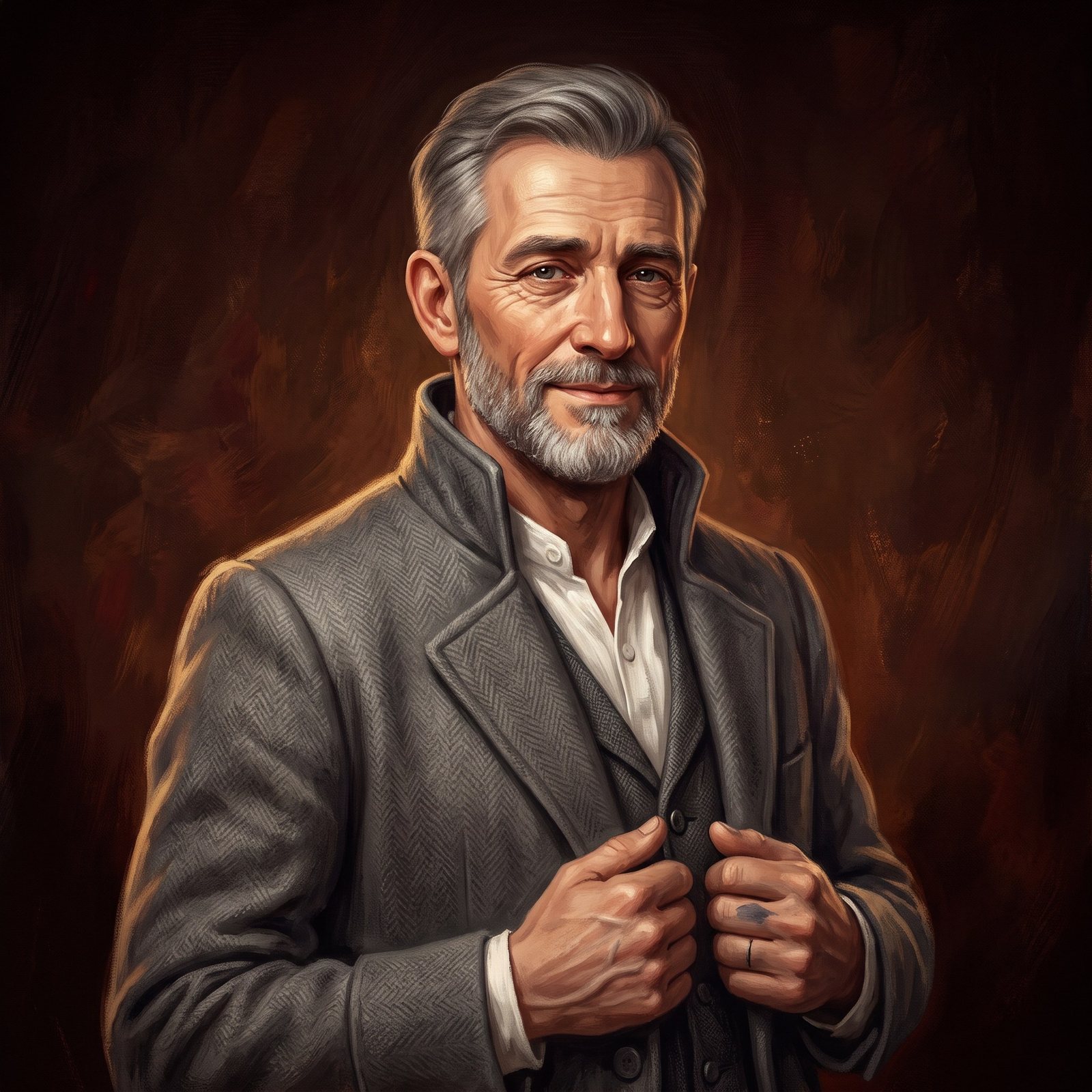
These are the director's notes from STORY-QUESTS-1 (25 October 2026) and STORY-MAYOR-2, STORY-MAYOR-3 and STORY-MAYOR-4 (26 October 2026). The Prologue never says any of this; it only leaves the clues (see The missing mayor). Names marked (working) are placeholders.
Who
The Puppeteer is Ser Filip (working), the missing mayor of Stara Luka: the town's notary before he was its mayor (Ser is a notary's title), the man who wrote half the town's wills and remembers every name. The town thinks he is about sixty. He is about three hundred years old. He is the last of the patrician family that took the Octagon: the child of the cadet branch whom the town walled up alive in the plague year, and whom the rope-maker who kept the founder's hoist pulled up the shaft. Every rope-maker of Stara Luka since then has been him, and so is the good mayor. The family name he doesn't use is the last word of the reveal.
He is pure evil behind a good man's face. He is not a warm man who went wrong. He is something three hundred years old that has played a warm man perfectly for thirty years, and the town's love is his best cover.
| What the town sees | What it is |
|---|---|
| pays his tab before he is asked; pays twice the price | he never owes anyone; everyone owes him |
| remembers every name, every birthday, every dead man's trade | a notary's register: he is counting the town |
| sits with the dying and holds their hands | he watches how they go. He has never cried at a funeral, not even at his own family's |
| writes letters for people who can't, for nothing | he reads everyone's letters |
| bought a widow's whole harvest at double: forty jars for the forty houses of the fever winter | penance for the town to see. He never collected them |
| an extra coin for a brave boy | he pays the tools he likes |
| took the blame for the fever ship and never once blamed the town | the town's forgiveness is the thing he hates most |
The one true thing in him is his love for his wife and daughter. It doesn't make him good. It makes him certain.
The rise: three hundred years (STORY-MAYOR-4)
- The child on the rope. At six he lay three days in the walled-up cadet chamber beside his mother's cold hand, until the rope-maker heard him crying up the shaft and hauled him up in the iron cage. The town called him the tomb child. Everything since is that rope.
- The chest. At nine he broke the rope-maker's chest open, learned the old hand to read it, and read the founder's papers to the end: a lord who struck a bargain under the headland, tied threads to his dead servants, lived far longer than a man should, grew afraid and tied it shut. "Let nothing I have raised and no one of my blood ever undo it."
- The first thread. At nineteen he rowed alone to the old sea door and climbed to the deep chamber where the founder's servants, bones in livery, still trimmed their lamps. A thread was warm, and knew his blood. A servant bowed to him: the first creature in his life that ever had.
- The bargain. At thirty he took the founder's oldest thread in both hands and struck the founder's bargain again with the stone: a year for a life, one life given to the headland before its time, every spring. His first payment was the rope-maker who had pulled him up the rope. That is the night he became the Puppeteer, a warlock of the Pact of the Thread.
- The long apprenticeship. A hundred dead on one bar; his voice through a dead mouth; whole cemeteries called up; at last a king. He wore nine rope-makers' faces, father and son, each "the spitting image of his father", and nine coffins in the rope-makers' vault are empty. The family joke, "We were lords once. Don't go up the headland at night," is his own. The town says "the headland takes one a year", and doesn't know why.
- The good mayor. About thirty years before the game "the rope-maker's son" Filip came home from the notaries' schools of Ragosa, and made himself the best man in Stara Luka: the notary, then, about twelve years before the game, the mayor. Every kindness was a tool. The best mask is the one a town paints on you itself.
The fever winter
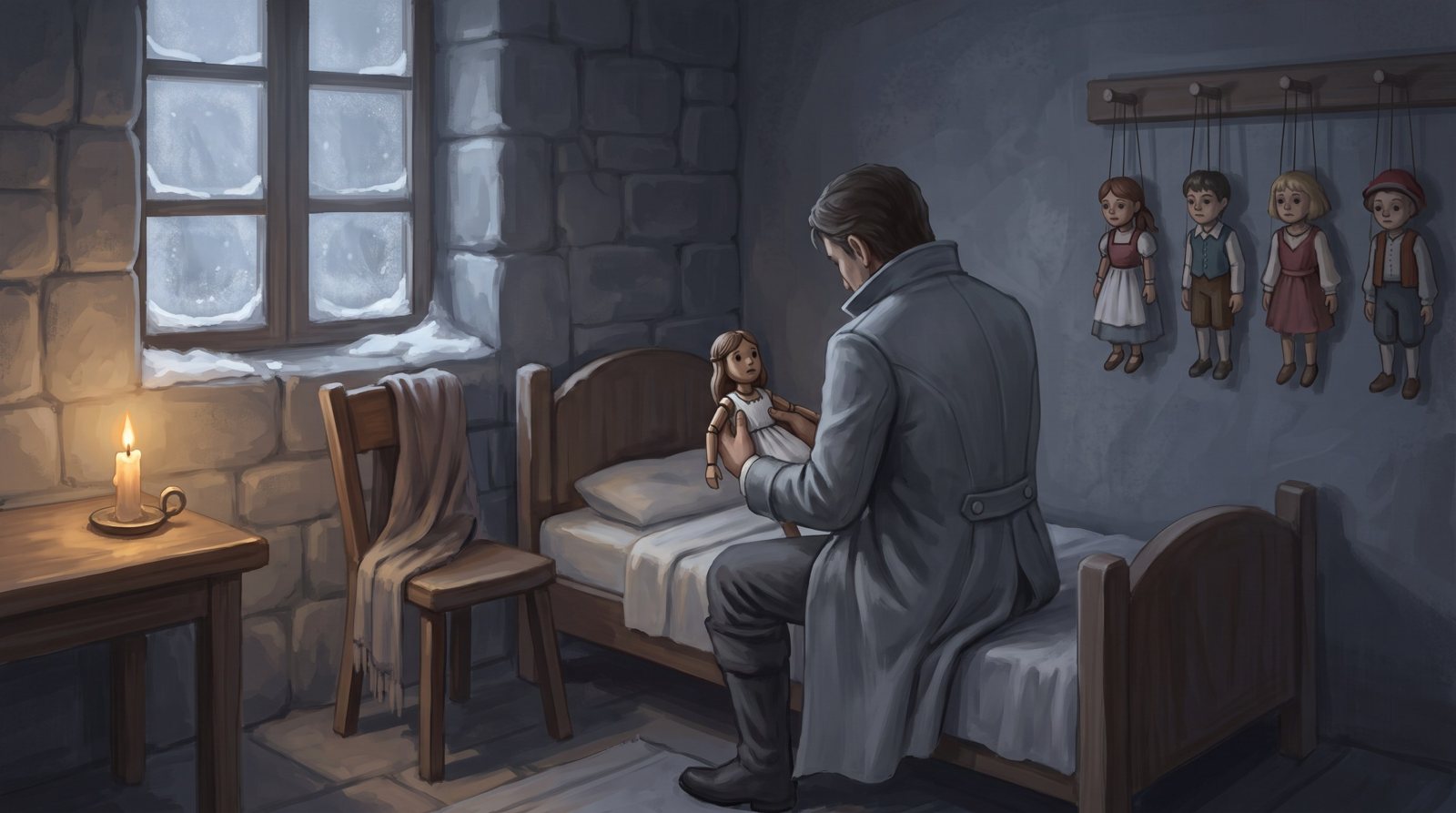
About ten years before the game, wearing a face of fifty, he married Dora (working), the town's midwife, quick and laughing, who teased him about his lordly ancestors. He chose her because she was useful; she was the first person in three hundred years who laughed at him and made him laugh back. Mila was born the next year. For her he carved marionettes, a fisherman, a goat, a sea serpent and a girl in a white dress who was Mila herself, and every night he did their voices. "Make her talk, Tata." For eight years he was almost the man the town thought he was. It came three hundred years late.
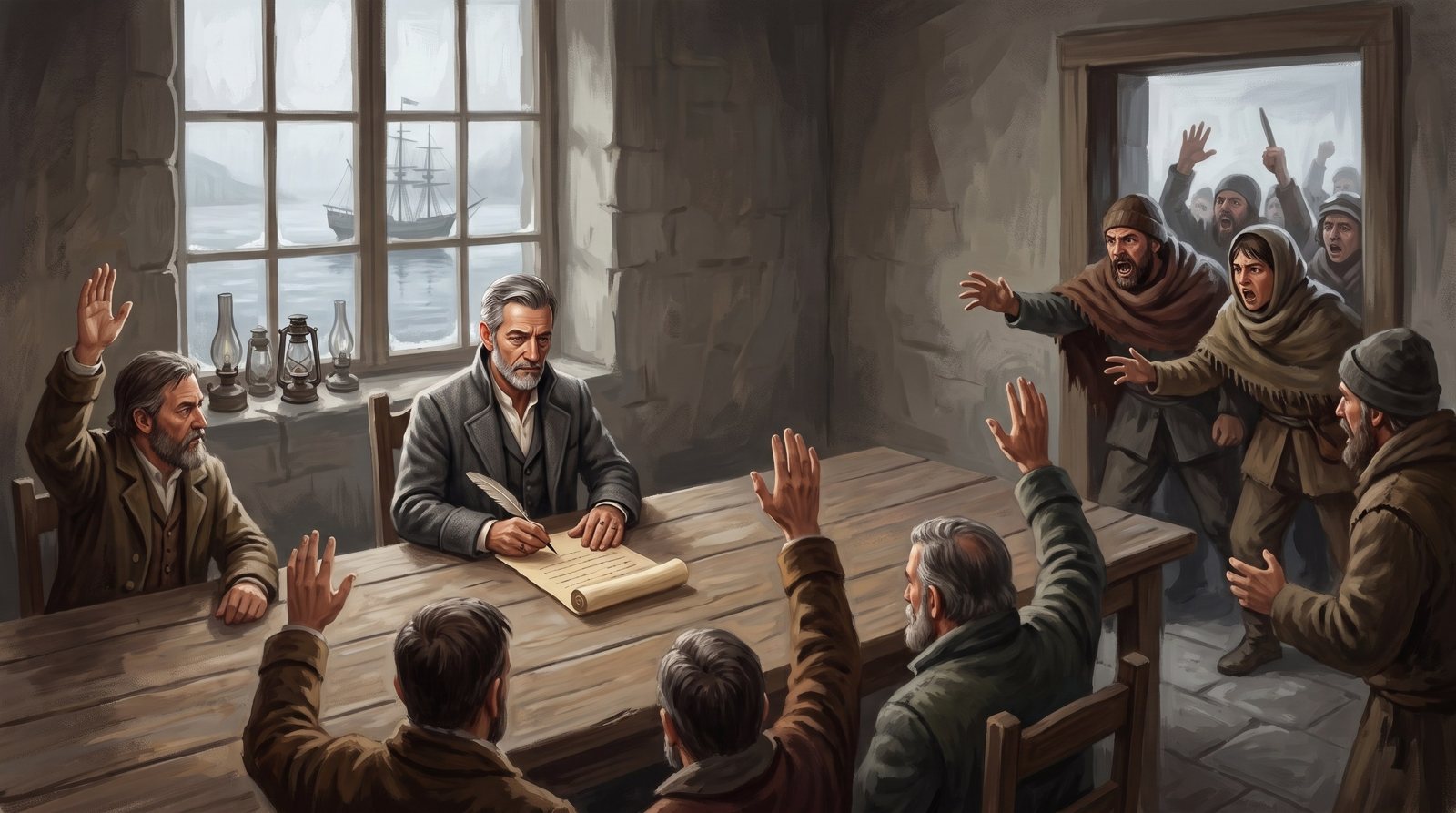
Two winters before the game a grain ship with sick men aboard anchored off the hungry town. Filip said thirty days at anchor, as Ragosa would have done. The council, the fishing families and a crowd at his door said the town would starve first. On the third day the council outvoted him, and the town's law made the mayor sign. He signed it in his lovely hand. The fever came ashore with the sacks, and forty houses buried someone that winter. Dora nursed the sick children of the houses that had shouted loudest for the grain, and brought the fever home. Mila, seven, died first; Dora died a week later. Her last words were: "Don't you go up the headland for us, Filip. Not for me. Not for her. Promise."
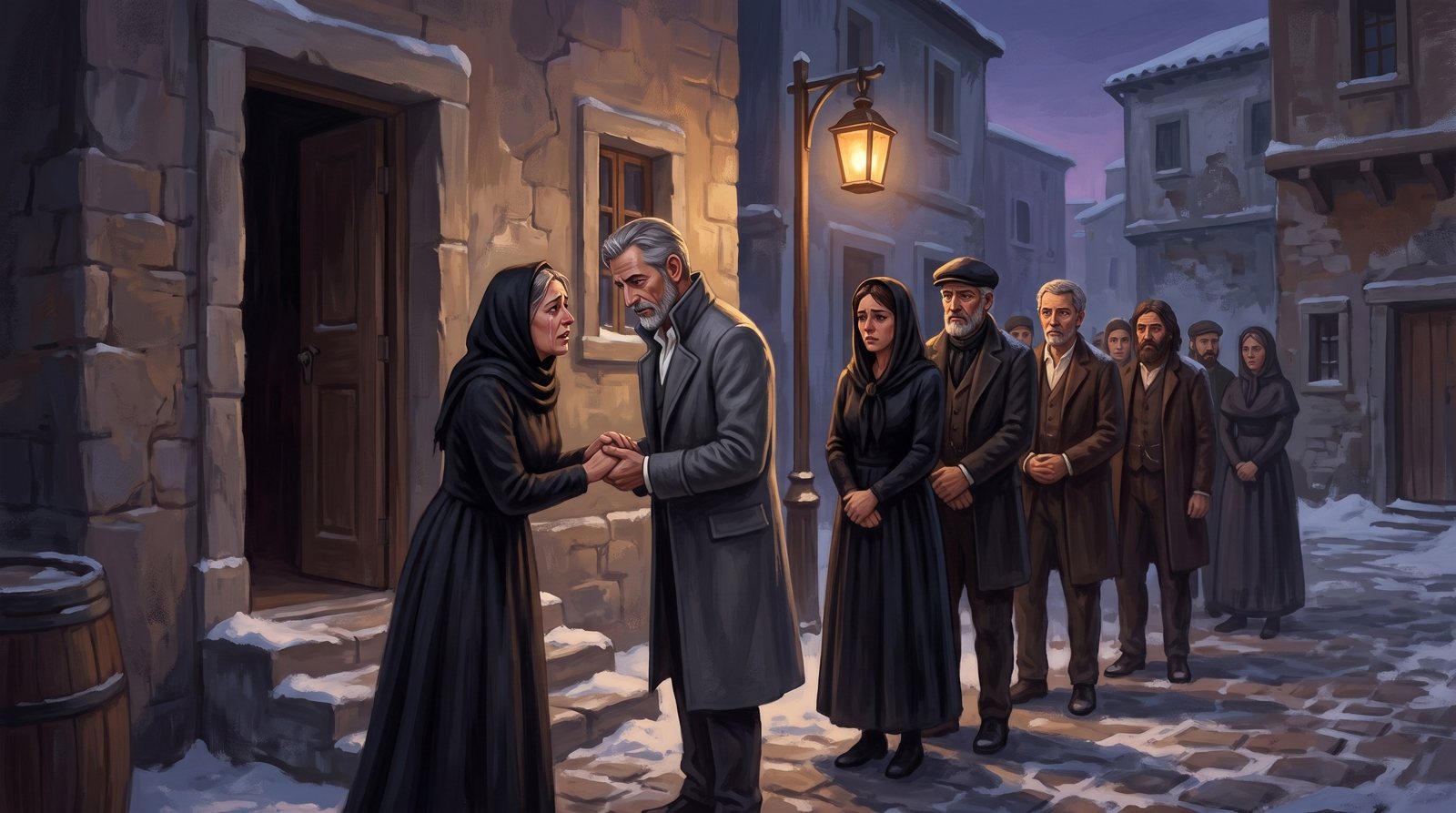
Then the town came to his door, one family at a time, to say that it wasn't his fault, that he had only signed, that they forgave him. He thanked each of them. At forty funerals he held every hand and never cried once. That winter the man Dora married ended. What was left kept his face.
The ninth night
Nine nights after Mila's burial he broke his promise. He had held threads for almost three hundred years, and never tied one to anyone he loved.
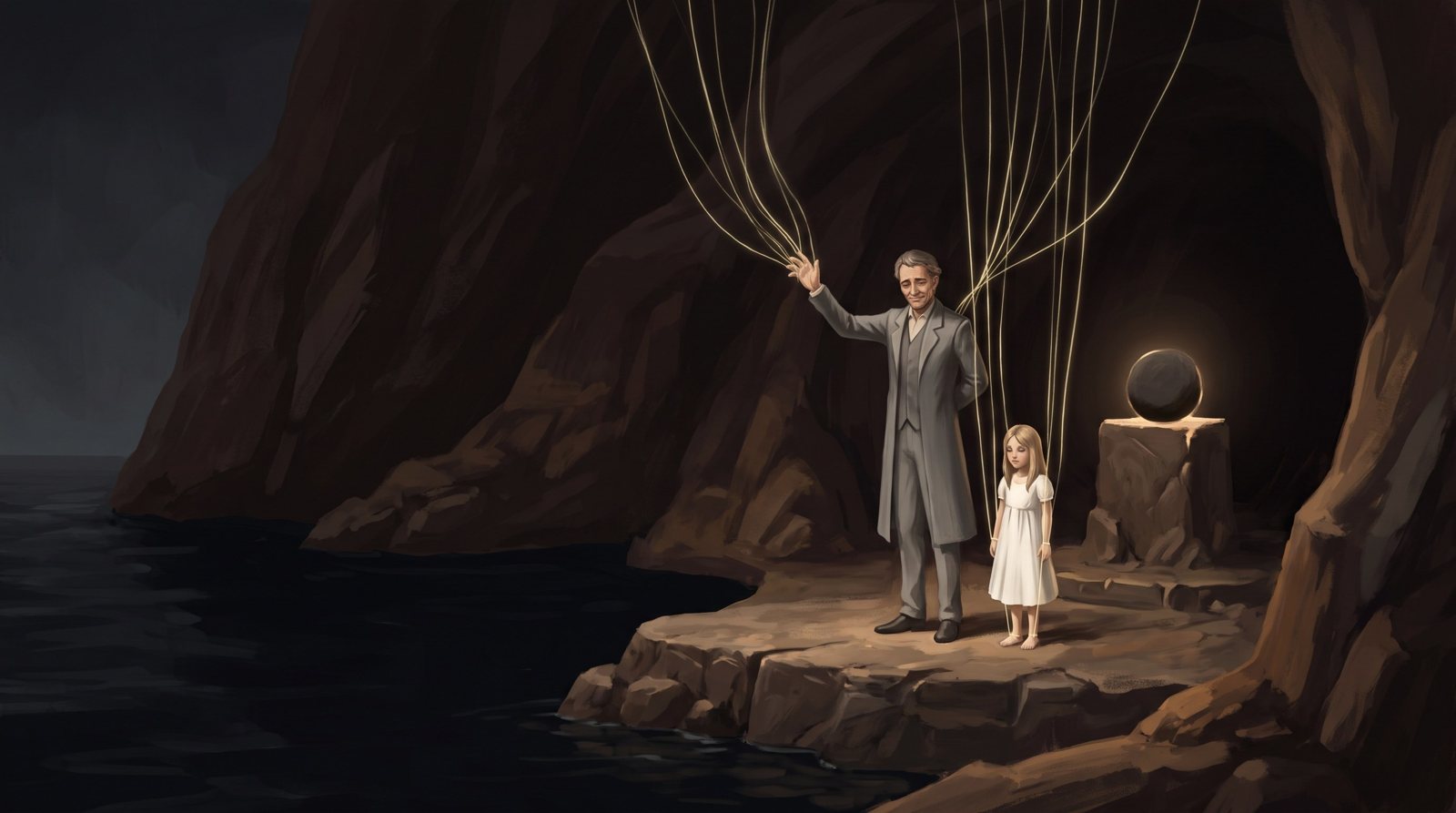
That night he took Mila out of the rope-makers' vault (her coffin there is empty to this day), carried her into the walled-up cadet chamber of the family crypt, and tied a thread to her before the earth had her. She stood. She smiled when he pulled. She never spoke. He tried once to give her a voice, the way he did the marionettes, heard his own voice come out of her mouth, and never did it again. That night he cut the strings of her little white-dress marionette, carefully, and he has carried it in his coat ever since.
He left Dora where she was: a week in the ground was too long for a thread to keep her whole, and he would not have her back as bones. He would have them both back properly, or not at all.
What he wants
The founder's papers told him of three stones, "woken together, a ruler who never dies": one under Stara Luka, one under the hall of the northern kings, and a third the founder never found. The dead obey the ruler of the stones, and Filip reads that as the answer: Dora and Mila will come back to him whole. The papers never say so. He has read the page so often that he no longer sees the difference.
The old texts also name the price: "A ruler who never dies rules a people who never live." He smiled when he read it. That is the town's sentence: every soul in Stara Luka on threads, forever, for his two. After the town, the island; after the island, anyone in his way. He cuts the price out of every text on the party's road, not because he can't bear it, but so that no one who could stop him ever reads it.
A notary corrects a register when it is wrong, so he crossed the walking dead out of the book of the dead, neatly, with a ruler: they aren't dead, they are his. Dora's is the one fever-winter name he left, because he means to write her back in himself. His mirror is King Ormar, who carves a notch for every name he loses and remembers them all.
The year of threads
He wrote twice to the scholar Teodor Cvitan for everything on the old empire's "kings who did not die", and never paid for the copies. He bought Jela's whole olive harvest at double the price, for the whole town to hear about, and never collected it. At the thaw he sailed north "on the town's business, to the capital", the words the stable boy repeats in Chapter 1, and woke the stone under Jarnborg. It sits in the Iron King's crown, and through it the Iron King is his. "Kings make better puppets than liches." Every notch on King Ormar's pole is someone Jarnborg's men took for him: more hands, more threads.
That summer he set the dead to cut the founder's collapsed passage toward the stone under the old town, and hung all their threads on one control bar dressed in robes and a staff: the hollow lich. He gave his control bar a face, so that whoever broke it would think they had broken the master. The dead didn't only dig. When he left the town he let them go on purpose, and every night the town buried its own, the way he had buried his.
The founder's knot
Late in his life the founder, frightened of what the craft had made of his house, tied the stone under Stara Luka shut with a knot of his own thread, and wrote on his last page: "Let nothing I have raised and no one of my blood ever undo it." The dead can't cut it. Filip can't cut it. Only a living hand from outside his blood can. That is why he writes letters.
The two letters
- The first letter was a key. About three weeks before the party came, he sent Captain Harl's company (Harl, Teska and Ilm, with Jure's boat and his deckhand Roko) in by the sea door, with his own key to the gate on the tomb stair. They would find the knot, thick with threads like the heart of the curse, and cut it to "liberate the town". The dig was weeks short. Harl's crew saw the dead tunnelling toward the town, ran up instead of back and locked the gate behind them; Roko cut the boat loose so it would drift home empty, as a warning. Filip felt the gate shut in his threads. He sent the crypt's dead up the stair against them, and for days he listened until the last of them stopped. Then he stood them up again for the next crew.
- The second letter was a leash. He told the council he would fetch help himself, sailed to Meneferu, watched the party for three days and handed Vella a letter with her name on it. He chose each of them. Vella: a warlock whose mark wakes near the walking dead and near old stones, curious, and good at keeping secrets. Stalvan: strong enough to break a lich, the party's heart, and the red stone he told the pawnbroker he "could wait" for. The hero: a stranger to his blood, the hand he needs at the very end. He came home and promised the town "a company"; three came. He never pays them. "A paid man goes home. A man who is owed comes back."
| The first letter | The second letter | |
|---|---|---|
| To | Captain Harl's company, at Ragosa | Vella and those who travel with her, at Imsa's inn, Meneferu (proposal) |
| Chosen for | their hands | who they are |
| The way in | by the sea door, straight into the dig | by the front: his house, the trail, Nana, the tomb door |
| A key | enclosed | none: it was waiting in Harl's pack |
| The job | cut the knot now | carry the thread, and come back at the end |
| What happened | they locked him out, and he had them killed at the gate | they broke his toys, took his thread and walked his road |
How the threads work (the full rules)
Beyond the rules the player learns (above):
- He can speak through a puppet, the way he did the marionettes' voices: his own voice from its mouth, a little hollow. He never does it for Mila.
- A thread tied in time keeps a body as it was. Tied late, it moves bones.
- The control bar. He hangs most threads on a bar and works the bar; break it and every thread on it snaps back. He always holds a few himself: Mila's, and an errand hand, a drowned fisherman who laid the fish-scale trail, cut the party's boat after midnight and was Peels's hooded figure on the dock.
- The stone draws the raised dead, which is why they clawed at the inn's cellar grate: the last stone lies under Nana's inn.
- The Severed Thread is the cut end of his own thread to the bar. In another hand it pulls toward the nearest stone, and through it he feels, faintly, where it goes. When it glows in the vault at Papyria, he learns where the third stone lies: the one room he could never find.
- The soul is not on the thread. The body a thread moves is empty; the soul has gone on, or it waits somewhere of its own choosing. Mila was never in the body he keeps. She has been waiting on the hill with her mother the whole time. He does not believe this rule.
- The living, and the blue eyes (Act 2, the jungle; a proposal, Unconfirmed; JUNGLE-BEASTS-STORY, 2026-11-18). A thread on the dead needs no leave; a thread on the living needs a yes (The Escape). In the north that took a stone of the three and one man. In the jungle of Island 2 he learns a smaller way: a caught beast is starved in the dark, a dead kennelman holds out food every night, and the beast that eats from the hand is his, with no stone at all. Such a thread has no cord to cut. It sits behind the eyes and burns the animal's own life, so it shows cold and blue where his own threads are pale gold. What the beast sees, he sees; it never speaks, and he never speaks through it. He can hold it only from a bowshot away, through a dead post, until the story's last picture, where one sea bird far out at sea still has blue eyes. A bound beast can be called back by the thing it used to do. It is the cell he kept Stalvan in, made small and made many, and it is the other half of what he wants from the dead: here the soul is still in the body. Not everything that bites is his; in the jungle, some of it is. See Under the Green Crown.
The trail, explained
- The barred door, the overturned chair and the coat on its hook were staged.
- The sightings. Nana saw the real man a week before the party came, at his last supper; that night he borrowed the church key "to sit with Mila's name a while" and crossed the names out, Mila's first. Then he left in secret and got into Ragosa the day before its gates shut: an honoured guest at the council's table, the only one who laughs, and the perfect alibi. Mare's "mayor" three nights before and Luka's last night were a dead man in his second coat, speaking in his voice. "Tell them I went to the capital" was the only true thing on the trail, said so it would sound like a lie.
- The long box. Vid was hired to carry Mila's coffin east at the new moon; the party came three days late. While they fought in the tomb, the double was to carry her out. When they broke the lich it fell beside her box, and Bura walked alone to the spring where her master always stopped. Far away in Ragosa he felt the headland go slack in his hand and laughed. Mila's own thread held. He would not let anyone see her walk, so she is still standing in the dark of the cadet chamber, a few metres from where the party passed.
- His road. From Stara Luka only Ragosa sails. The bandits he pays hold the captain's crew, so the captain needs the party, so the party earns her ship to Meneferu. The drowned chart was a real loss, the party took it first, but their thread showed him the vault anyway. Zanze says, "Someone is following you." She is half right: he walks a day ahead on the roads he can see, and a day behind into the rooms he can't.
Vella's sight (Act 1 and after)
Vella's sight of the dead belongs to the acts after the Prologue: in Chapters 1–7 she sees no ghosts. (A proposal for the director.)
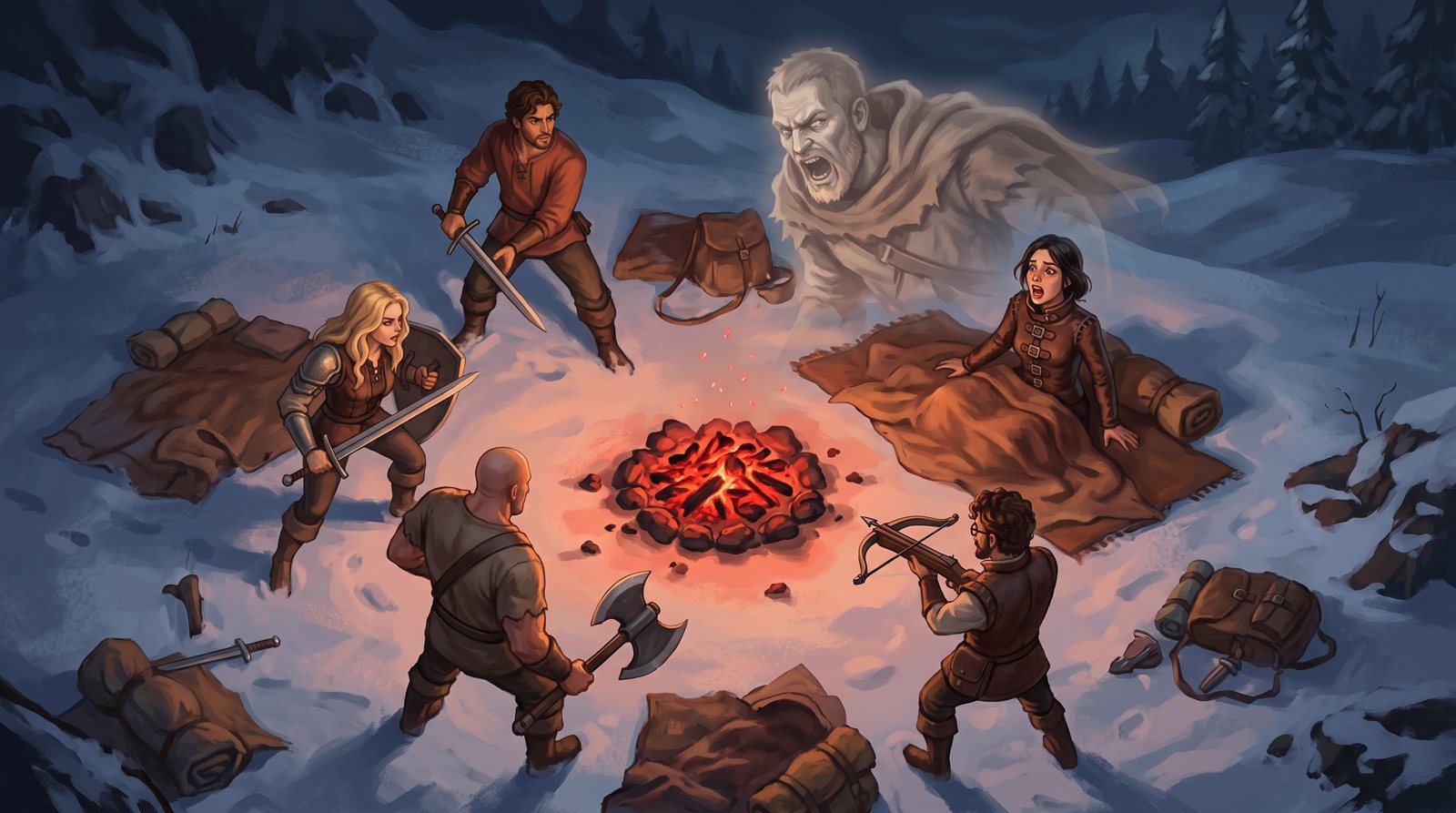
- The waking. In Act 1, a night or two after Stalvan's escape, the party of five sleeps by one fire in the hills north-west of Kaldvik. Close on Vella's sleeping face; her eyes open; instant fear; she screams. Her view: a dead man's face right above hers, roaring. The whole party is up at once, weapons drawn, and nothing is there. Stalvan: "What was that?" Vella: "I don't know." (beat) "Yet." Zanze takes out her notebook, and writes.
- The ghost is Captain Harl. He has followed his water-stained contract, which the party has carried since Chapter 1. He wasn't attacking her. He was shouting the warning he died holding.
- Its name. In Act 2, at the masked ball, Zanze names it from the library's books: Zanze: "You've looked at that staircase as if someone was standing on it. Four times tonight. There's an old word for it in our books. Grave-sight. You see the ones who haven't gone on." Vella: "Lucky me." (A side quest, The Captain's Watch, working, is the option.)
- What she sees. Only the dead who wait: for a word they never said, for a wrong to be known, for someone they love. Only she sees them. They never speak, and they never accuse. The sight grows out of her pact mark, which fills from every walking dead the party destroys.
The hints after the Prologue
- The voice in the dark (Act 1). In Stalvan's cell, night after night, the Iron King comes down and talks to him in a voice that isn't the king's, a little hollow, always telling the same stories in the same words. One of them: "When I was nine I broke open my father's chest, the one he kept locked. It held the only words my family ever wrote that were worth reading. Every family has a chest like that. Most never open it." After the escape Stalvan tells it by the fire his way ("I said mine had a bread box. He didn't laugh."), and Zanze writes it down, word for word, as she writes down everything Stalvan says.
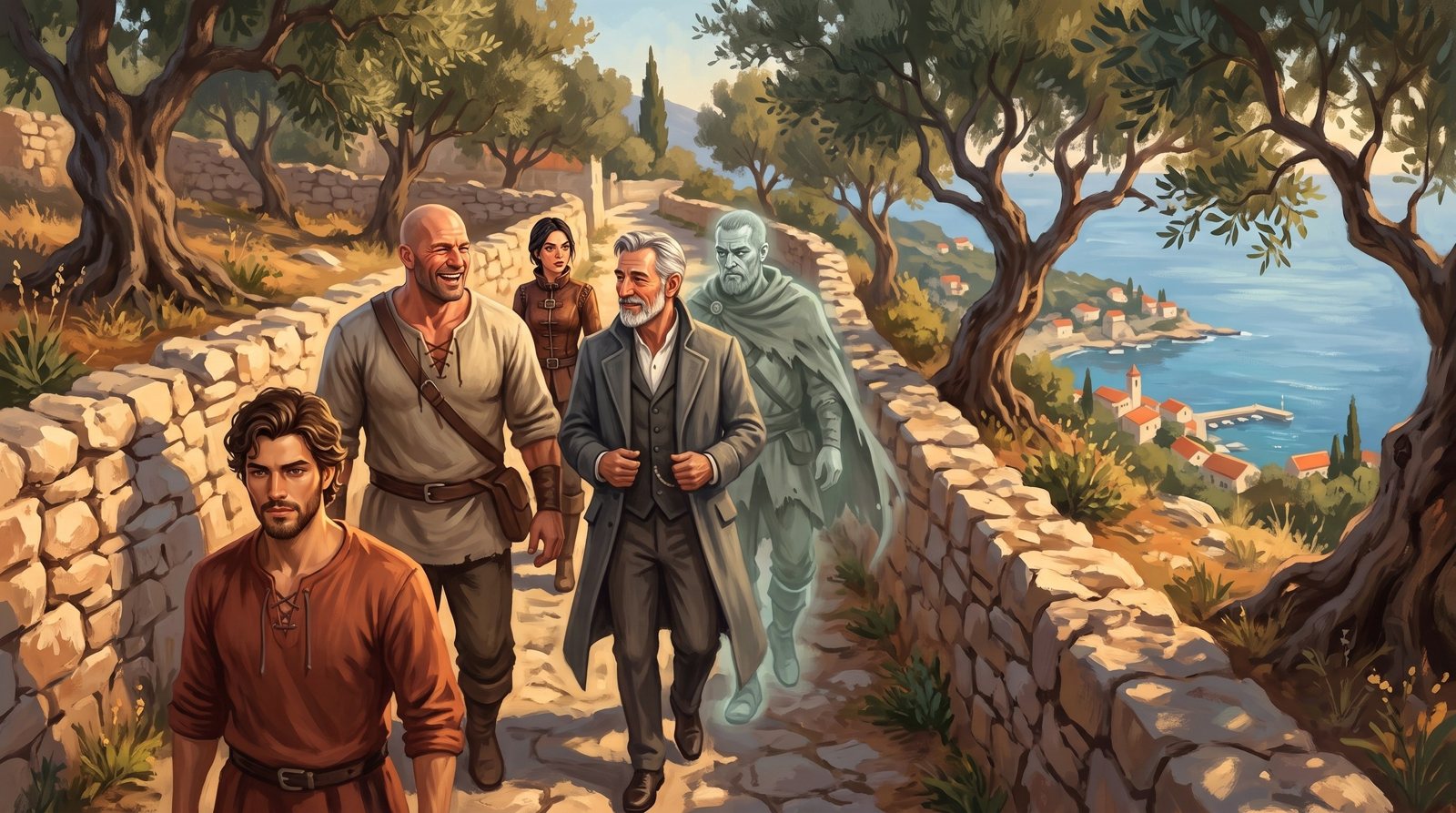
- The captain behind him (final act). On the road home the ghost captain walks behind Ser Filip, staring at the back of his head, and never leaves him. Vella: "The captain from the crypt. He hasn't taken his eyes off you since we left." Filip: "Then he and I have something in common. I couldn't save him either." It reads as guilt. It is a joke.
- The two on the hill. Back in Stara Luka, Vella sees a woman and a small girl in a white dress on the hill by the mausoleum, looking down at the town, waiting. And the town's dead step out of the mayor's way in the street, and turn their faces from him.
- The ear. As a "prisoner" he jokes about Stalvan, "He keeps breaking my chairs." The Puppeteer said, "You keep breaking my toys."
The reveal: the slip at Nana's table (final act)
Found in the final act "a prisoner" in the north, thin and grateful (Unconfirmed: once the Iron King's; after The Escape, the proposal is Jarnborg's high loft), Filip travels home with the party: kind, funny about Stalvan, generous with what he knows. The last stone lies under Nana's inn; what the party does for him on the day they come home is still to be defined. That night, at the inn after closing, he is at ease for the first time in two years, and tells the story he loves:
- Nana: "Where does a rope-maker's boy learn a hand like yours?"
- Filip: "From a locked chest. When I was nine I broke open my father's chest, the one he kept locked. It held the only words my family ever wrote that were worth reading." (he smiles into his cup) "Every family has a chest like that, Nana. Most never open it."
- (Zanze's pen stops. She turns back the pages of her notebook.)
- Zanze: "What?" (beat) "Can you say that again?"
- Filip (the warmth goes out of his face, and nothing else changes): "You heard me well."
- (He turns to Stalvan, who has put his spoon down and is already standing.) "Even this empty-headed brute has figured it out."
- Stalvan (quiet, for once): "Same story."
- Nana: "Filip...?"
- Filip: "They forgave me, you know. Every one of them came to my door and forgave me. For what they did."
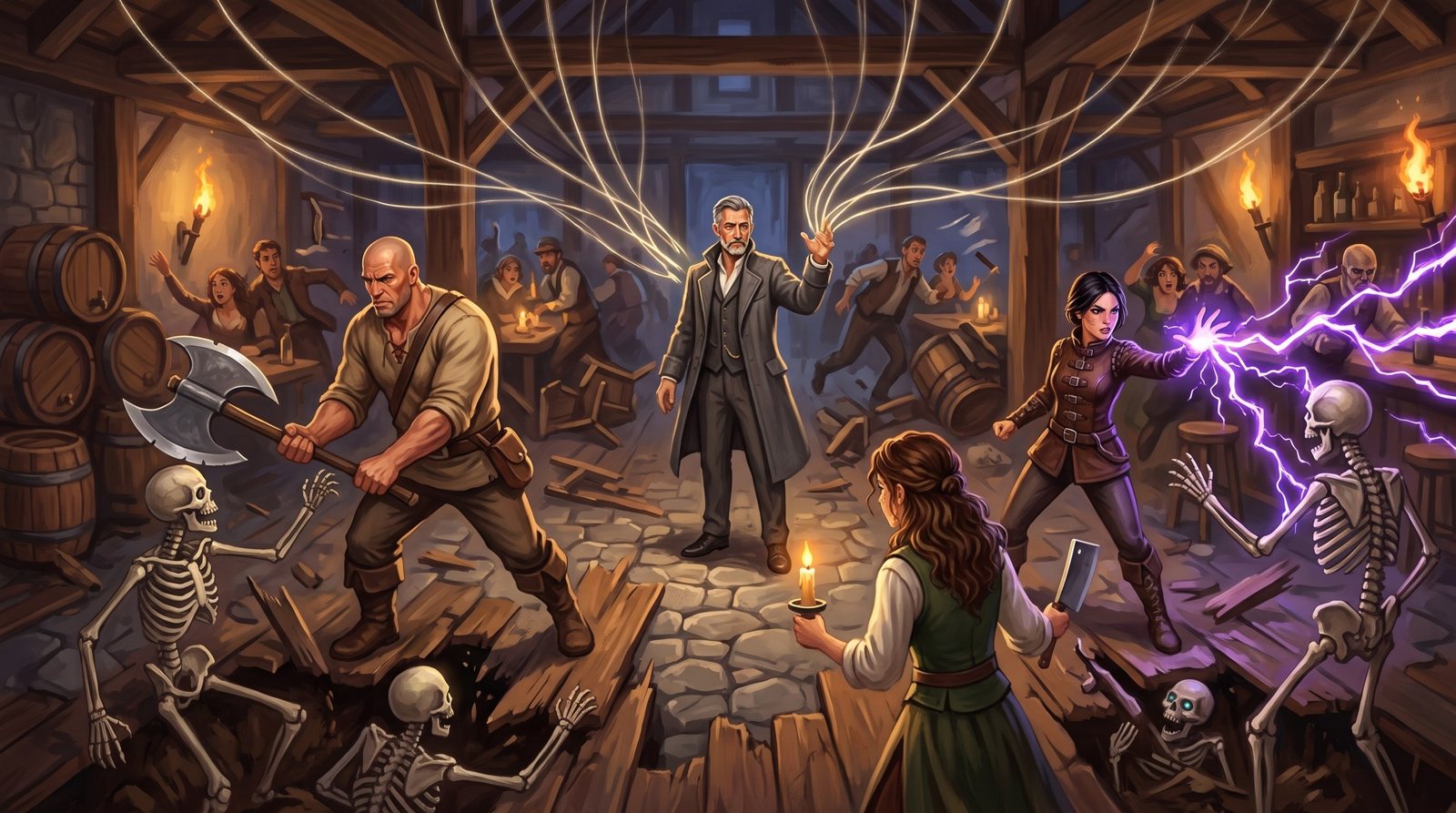
Then the chaos starts, because now he has everything he needs. The threads come down through the roof beams, the floor lifts over the last stone, and the dead of Stara Luka rise again.
His lines in the last fight (draft):
- "The door is open. Come alone, and bring the key." (the words of the summons in Bura's saddlebag, said now as a welcome)
- "Harl was a good man. He understood exactly half of it. Harl died to lock that gate. I wrote to you to open it."
- "I never paid you. A paid man goes home. A man who is owed comes back."
- "I asked you to liberate my town. I never said from what."
- "You never followed the thread. It led you. I only had to follow you."
A small girl in a white dress stands beside him on threads of her own. He never does her voice, not even now. Vella: "That isn't her. She isn't in there. She's on the hill, with her mother. They've been waiting for you." He doesn't answer. He pulls the thread, and Mila's body lifts its hands. When he dies, every thread he holds falls, and Mila's body lies down at last.
The last scene of the game
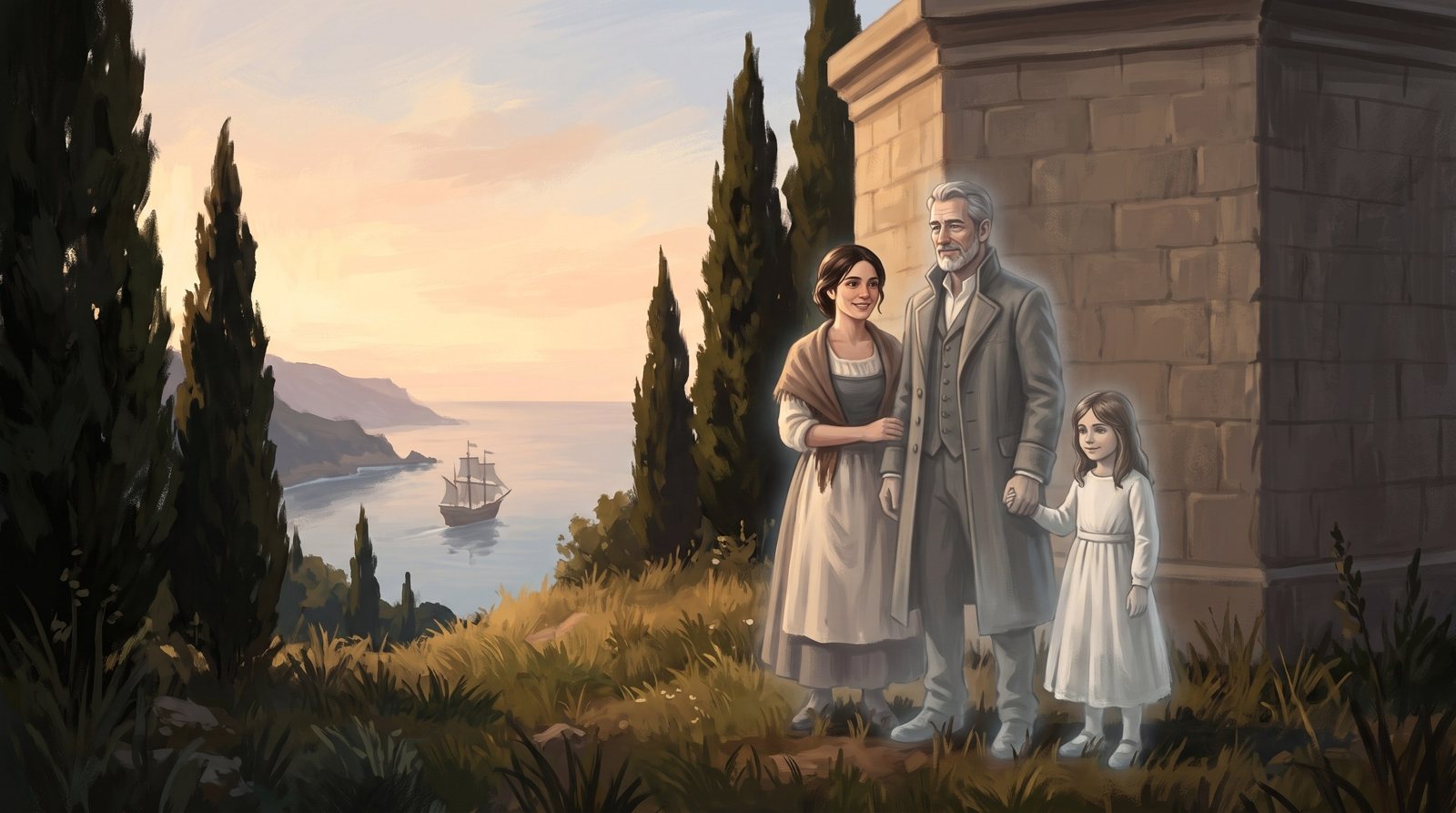
It mirrors Chapter 1: the party came in from the sea at sunset, with the mausoleum on its headland; they leave at dawn, past the same headland. The town is on the dock, Nana, Peels, Mare and Luka, and the ship pulls away with the hero, Vella, Stalvan, Zanze and Manfred at the rail. Vella looks up at the headland. On the hill where the mausoleum stands, among the cypresses, three figures: Ser Filip, Dora, and Mila in her white dress, holding her father's hand. Happy, content, quiet. Only Vella can see them. He looks down at the ship, at her, at peace at last. She nods to him, once. The ship turns out of the bay, and the hill falls behind.
Still open
Unconfirmed — awaiting the director: the family names (proposals: the rope-makers Užar, "rope-maker"; the patricians de Nodo, canting arms on nodo, a knot, or Corvo, after the crow on the Octagon's roof); what the party does for him on the day they come home, and the shape of the last fight (the director: "we will define this later"); what wakes Vella's sight, and whether The Captain's Watch side quest is wanted; why the Iron King took Stalvan (proposal: the red stone answers the stones, and a man that strong is the champion a puppet king wants); Vella's patron and why the Puppeteer knows it; where the party was hired (proposal: Imsa's inn in Meneferu); whose ship carries them out at the end; whether Peels saw more than a hooded figure.
See also
- The missing mayor · Vella · King Ormar · The Patrician family · Lich King
- The Prologue · Side quests of the Prologue · Open questions
Sources: docs/plan/story_mayor_2.md (STORY-MAYOR-2, -3 and -4; STORY-COINS-1 in docs/plan/story_quests_1.md §11; the user, 2026-10-26: "puppeteer should be pure evil that is motivated by the death of his wife and daughter, but he is pretending to be good as a mayor", "last scene of the game: party is leaving staraluka in a ship", "vella ability to see the dead can be introduced later", "big reveal that the mayor is the puppeteer", "vella and ghost ability should be introduced later not in prologue"); docs/plan/story_quests_1.md §2 (STORY-QUESTS-1); "plan - future for prologue.md" (the Puppeteer, Chapter 6); pictures: references/concept/story_mayor_3/ and story_quests_1/ (Nano Banana 2, look-dev only).
Last updated: 2026-11-17 (SYN-REST: full synopsis, D-WIKI-SYN-2)
Categories: Characters · Villains · Story