The Halun
| The Halun | |
|---|---|
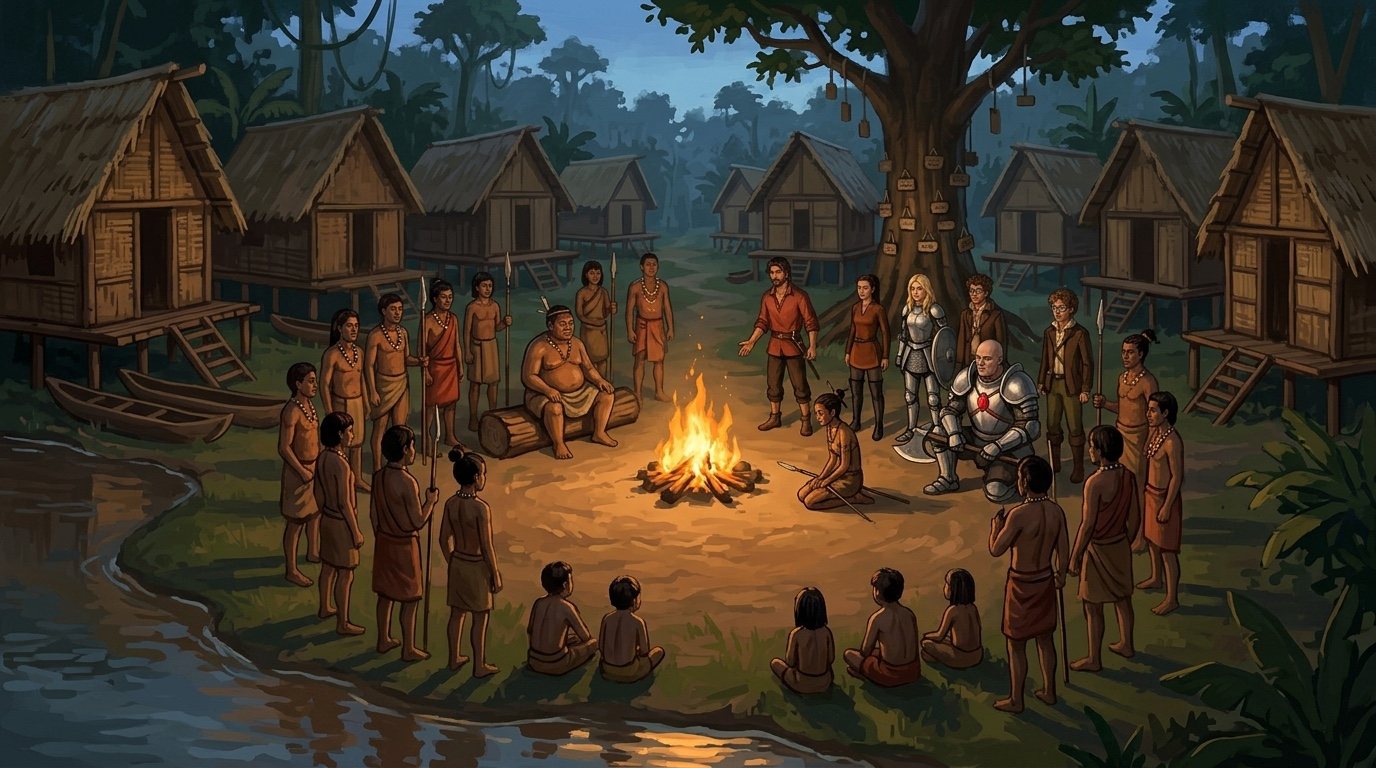 Wenatu's fire ground at dusk (concept art, proposal) | |
| Type | A people of the jungle (lore) |
| Name | Halun, "those who walked out" (working); their tongue is Halu |
| Where | The south of Island 2: Wenatu, Pohu and smaller villages along the Oyowa and the west coast |
| Forebears | The Ilkari, the step-pyramid builders (proposal for Q30) |
| Story | Under the Green Crown |
| Status | Proposal, Unconfirmed — awaiting the director |
The story, as you play it
The Halun are a people of the jungle in the south of Island 2. You meet them in Under the Green Crown, when Ilo, a young river-runner, takes you home by a road her own law forbids.
Strangers. At her village, Wenatu, you are sotu: nameless. The village judges Ilo at the fire, and you speak for her.
Their laws. Nobody climbs a pyramid. The dead go down the river on reed rafts. Children sweep the white causeway every dawn. A gift must be answered. They wear no gold.
What is wrong. Their old singers went with the gold company. The gilded dead walk at night. And the beasts have "gone sotu": blue-eyed, standing in rows, with no habits left. Their best tracker has hung up his bow.
How it ends Spoilers
The walk-out. The Halun are the pyramid builders' children. Their forebears walked out one night, after a child saw priests speaking for a dead king. The Puppeteer's buyer never heard that verse.
The beasts. Each took a gift it can never answer. The Halun know the cure: give the beast back the thing it does.
The river. At the end they sing the kept kings down the river.
The Halun ("those who walked out") are a people of the jungle in the south of Island 2: fishers, hunters and growers of bitterbean along the Oyowa river and the west coast, and the descendants of the Ilkari, the builders of the step pyramids. They are written as a people with their own laws, humour and aims, never as a faceless tribe.
A design proposal for the full game, not the prologue. Every name is a working name; everything on this page is Unconfirmed — awaiting the director. Design notes may say the pyramids are "in the manner of the Maya"; in the game no real-world people, place or faith is named.
The walk-out
The Ilkari, "the Counters", counted everything on stone and kept their dead kings whole in the Green Well. When their last king, the Long King, died, his priests went on ruling in his voice through a shaft cut up through the Well House, and by the Ilkari's own tally he reigned 211 years. The people built until they starved. One night a child climbed the Well House, which only priests climbed, looked down the shaft from the top and saw the priests speaking into it. She came down and told the plaza: the king is dead; he has been dead all along. That night the people walked out along the causeways and left the city, the gold and the kings to the jungle.
The Halun do not like to say they are the Ilkari's children. The end of the walk-out song, the child at the top of the shaft, is sung only among themselves.
The laws
- Nobody goes up. No Halun climbs a pyramid. Only the child went up, once, so that nobody would have to again. (The Last Step is the jungle's watchtower: climbed before the party is named, the village sees it.)
- The dead go to the river. A body is laid on a reed raft at dawn and sung down the Oyowa to the sea. Keeping the dead is the worst thing a person can do.
- Sweep the road out. At dawn the children sweep the White Causeway, the road the walk-out took.
- A kesa is answered. A public gift must be answered within a moon with a gift of the same weight, and weight is not price: a story, a day's work, a song. An unanswered kesa makes you sotu.
- A lie told at the fire costs a day's silence.
- The Speaker is chosen by lot, every year, from those who do not want the job. "I drew the short reed. Twice."
Faith
The soul walks on after death the way the people walked out of the city: it leaves the body and goes down the river to the sea (the Long Walk; the passing itself is wa'ena, "the door"). A body kept holds its soul waiting at the door, so the Halun fear the kept not because they bite but because they are held. In the game's world this is true: a thread moves a body and never keeps a soul, and the kept kings' souls have waited by the Green Well for centuries, where Vella's grave-sight can see them.
The beasts gone sotu
Added 2026-11-18 (JUNGLE-BEASTS-STORY); a proposal, Unconfirmed. This is the view of Wenatu and Pohu; other peoples of the jungle may have other words.
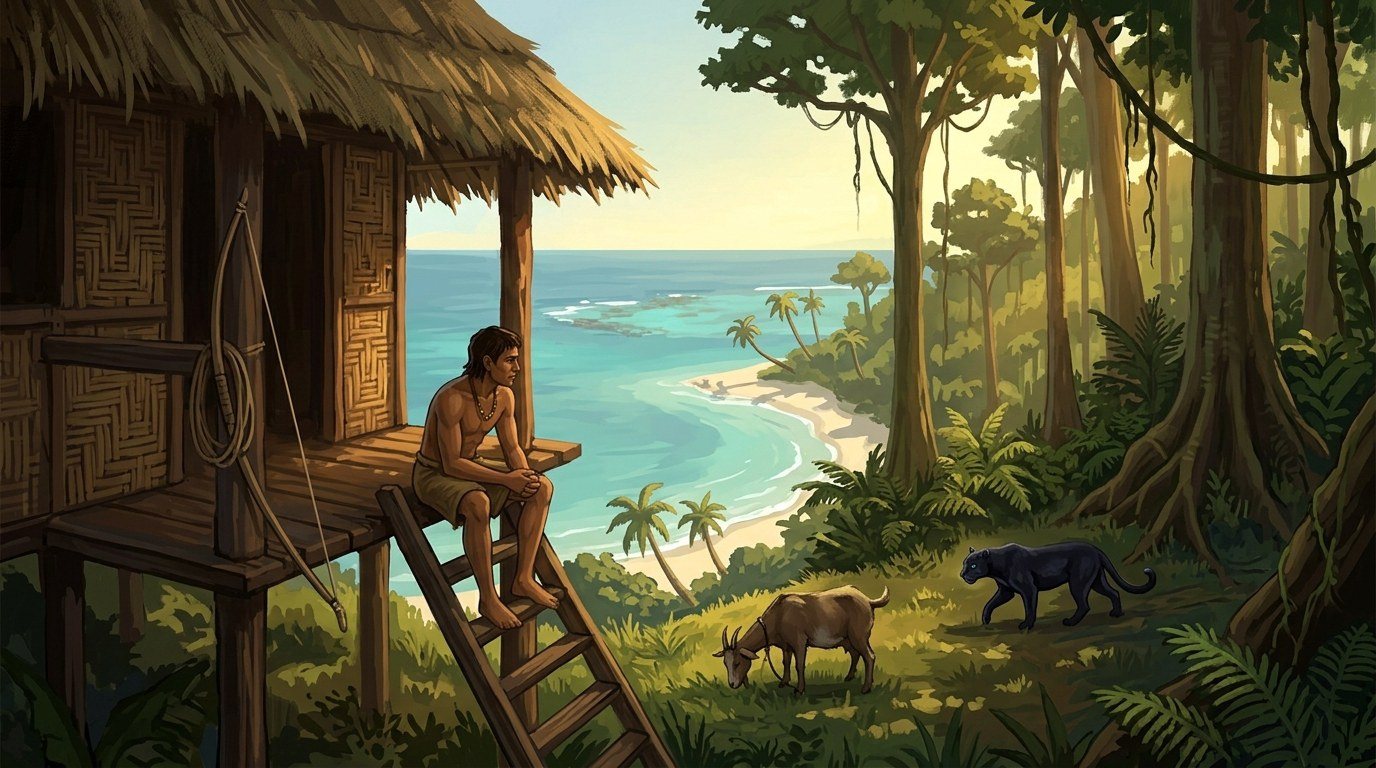
Since spring some of the jungle's beasts stand in rows with blue eyes and watch (the bound beasts). The Halun's hunters know every beast by its habits: where it sleeps, what it eats, who it is afraid of. These have none.
- The hunters' word is plain: the straight ones. "Nothing alive walks straight."
- The fire's word is one the Halun already had. A name is what you do, and these do nothing of their own: the beast has gone sotu, nameless.
- What was done. The Halun understand it at once, because it is their own fourth law turned inside out. A gift must be answered, and a gift nobody can answer makes you nameless. The beast ate from a dead hand. It took a kesa it can never answer.
- The cure is the hunters' own: give it back the thing it does. A cat that followed children home must follow one home again. A monkey that stole must steal. Then the name comes back, and the blue goes out.
- What they do about it. They do not eat from a stranger's hand. Neha and the other singers, held at the well, eat only what the children send up: "We saw what ate from it." They leave the bound beasts alone where they can, and they do not hunt them: a hunter does not kill what cannot run.
- Their shame. Pohu's hunters dug the pits and sold the beasts alive to the gold company, for salt and iron hooks. Whether the fire hears it is the party's choice in the chain Nothing Walks Straight.
- Follows-at-Dusk. Wenatu's story is that a cat has always walked behind the last child home along the White Causeway at evening, and has never touched one; the village leaves her a pig a moon. The Halun say a cat walked out of the city behind the last of the people on the night of the walk-out. They do not say it is the same cat. They do not say it is not.
Words (flavour)
| Word | Meaning |
|---|---|
| hai / ume | yes, agreed / no |
| sotu | a nameless one: a stranger, a baby, or a person who has shamed themselves |
| kesa | a gift that must be answered |
| ohaku | the kept: the gilded dead |
| wa'ena | the door: the going-on of the dead |
| king's skin | gold |
| the straight ones; gone sotu | the bound beasts with blue eyes (added 2026-11-18) |
Humour and names
Deadpan, and by names. Every stranger is sotu until they earn a name, and the names are honest. The party's names, earned in the chain A Name for the Sotu (proposals): the hero Few-Words, Stalvan Holds-the-Door, Vella Says-Later, Zanze Writes-It-Down, Manfred Smoke-Before-Breakfast. After that the village calls them by those names. The Halun tease a person they like and are formally polite to a person they don't.
How they live
- Villages: stilt houses of dark timber poles, woven split-cane walls and steep leaf-thatch roofs, canoes drawn up under the houses; no stone and no gold (see Wenatu).
- Dress: plain woven cotton wraps in earth colours and sunberry red, seed and shell beads; fishing spears and bloodwood clubs. No feather headdresses and no masks.
- Trade: salt, dye, bitterbean, river-pilots for Mareva's bar. They take no gold.
What they do in the story
They act. Ilo breaks the law of the Dark Run to fetch help. Kawe arms the young men and raids the Company's sluices. Neha and the other Rememberers went with the Company of their own will so it would not take the young. Speaker Tawi bargains with Mareva and keeps the end of the song. At the end they sing the kept kings down the river. The people are on People of the jungle.
The other three peoples
Added 2026-11-19 (WARRIOR-STORY); a proposal, Unconfirmed. The Halun are one of four peoples who left the pyramid city on the night of the walk-out, by its four roads. The others are the Kiri, who live in the tree crowns; the Umeha, who live on ash terraces and do not speak before strangers; and the Mowe, who live on rafts. Nothing on this page changes. They are on The four peoples of the jungle, and the woman who wants all four at one fire is Suwena.
See also
Sources: docs/plan/full_game/island2_jungle_act2.md §3.1–3.2, §6 (JUNGLE-STORY, 2026-11-18).
Sources (the beasts): docs/plan/full_game/island2_jungle_act2.md §16.2, §16.4–16.5 (JUNGLE-BEASTS-STORY, 2026-11-18).
Last updated: 2026-11-18 (JUNGLE-BEASTS-STORY: the beasts gone sotu)
Categories: Lore & History · Peoples · Full game (proposal)